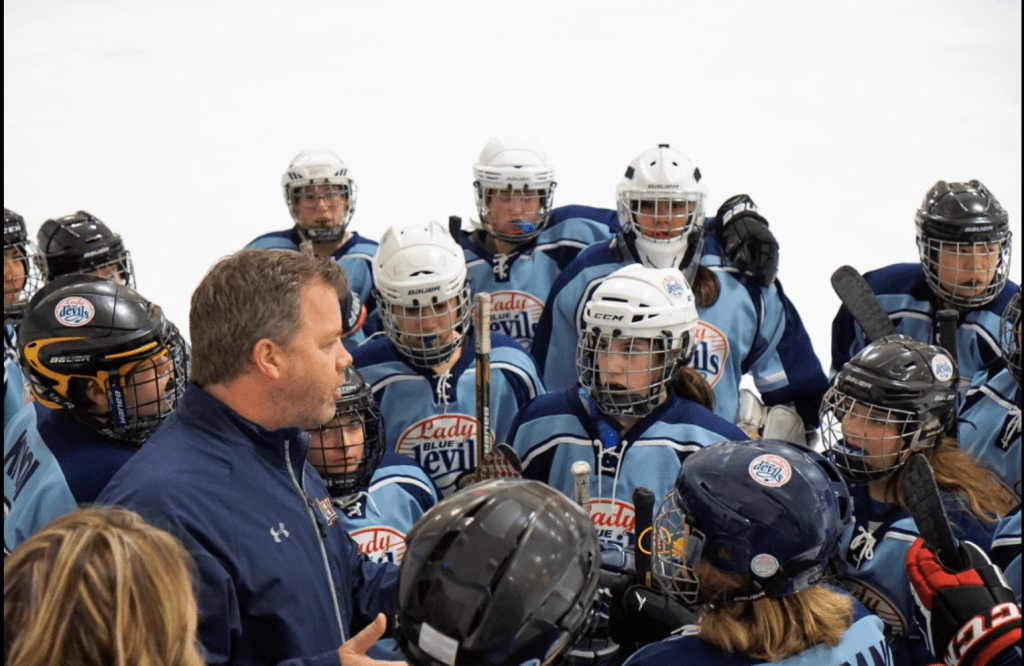
In the game of hockey, the role of a coach is a crucial element to a successful team. Coaches must motivate, teach, train, and mentor their players both on and off the ice. John Young has held this position for many years now, and today I get to share just a bit of his story. Although I may be a bit bias as his daughter and a product of his coaching, my dad definitely knows how to do this job! In this interview, we will look into Young’s coaching history and different strategies for coaching both men’s and women’s hockey. Let’s get into it!


Q: Can you tell me a bit about your hockey background? And how you got into coaching?
A: I grew up playing hockey in North Vancouver. My Dad, Grandfather, and Brother played so I wanted to play too. I played at a good level of minor hockey representing my Winter Club at each age level until I moved to California. I played AAA hockey for Norcal and won state championships in 1983 and 1986. I played Club Hockey at UCLA and played in the PAC 8 and PCHA Leagues with Championships won in 1989 and 1991. I was captain of UCLA from 1990-91. I got into coaching because I had spent some time in high school and college working at hockey camps as an instructor and I liked teaching skills and seeing kids get better and achieving their personal goals.
Q: How long have you been coaching? How much of this time was spent coaching men’s hockey compared to women’s hockey?
A: I coached for about 20 years. I coached boys hockey for about 15 years and I started coaching women/girls in 2014 or so. I coached for 5 years at the girls’ level.
Q: What do you believe are the most important qualities of a successful hockey player?
A: Being coachable, being a good listener, being willing to get uncomfortable, being accountable to your coaches and teammates, not being afraid to make a mistake, being willing to outwork everyone else, being willing to do work off the ice to be in the best shape you can be in, being humble, have a team-first mentality, be trustworthy… there’s a lot that goes into being a successful hockey player.
Q: In your experience, what are the primary differences between male and female hockey when it pertains to actual gameplay?
A: The checking part of men’s/women’s hockey is the biggest difference. Other than that the game is pretty much the same. Women have to learn angling skills and puck retrieval skills as they can’t hit the player off the puck. Men focus more on knocking the player off the puck. Overall there are more similarities between the two than differences.
Q: What are some of the unique challenges of coaching men’s versus women’s hockey on a more human, personal level?
A: As with any player and team you need to understand the makeup of the locker room (Personnel) and the different personalities you are coaching. Some people need to be pushed to be better. Some need a gentle nudge or a more sensitive approach to getting the coaching message heard. Good coaches know when to pull people aside and talk to them as they need to be talked to in order to make a point or build confidence, etc. I found that with my girls teams I needed to be more upbeat and encouraging and provide a fun atmosphere for the team to thrive and improve. The boys were more driven to win so I had to take a bit of a tougher approach to have them understand how to play with edge and aggressiveness and channel anger sometimes. The more competitive Men’s and Women’s teams (at a higher level) would be coached more similarly to each other as their goals were more similar (Winning). That’s why it is so important to understand who you are coaching and what the team needs. It’s never the same for every player and differs from team to team.
Q: How did you encourage girls to get on the ice when they may have believed they weren’t cut out for hockey or thought it was a men’s sport?
A: It was about making it fun and inclusive of everyone who was willing to try it. We celebrated girls wanting to find a new community and reward them for trying something new. We laughed a lot and it was critical to heap praise so that girls wanted to come back to practice next week.
Q: What opportunities do you see for the development of women’s hockey?
A: I think the pro women’s league will help to show girls and women that they can continue to strive for greater things after college. More girls coming out to “learn to skate” and “try hockey for free” programs will continue to help expose young girls to the sport. The more women that play act to promote the game to other aspiring young girls.
Q: Is there a particularly rewarding moment you had while coaching women’s hockey? Or a success story you are most proud of?
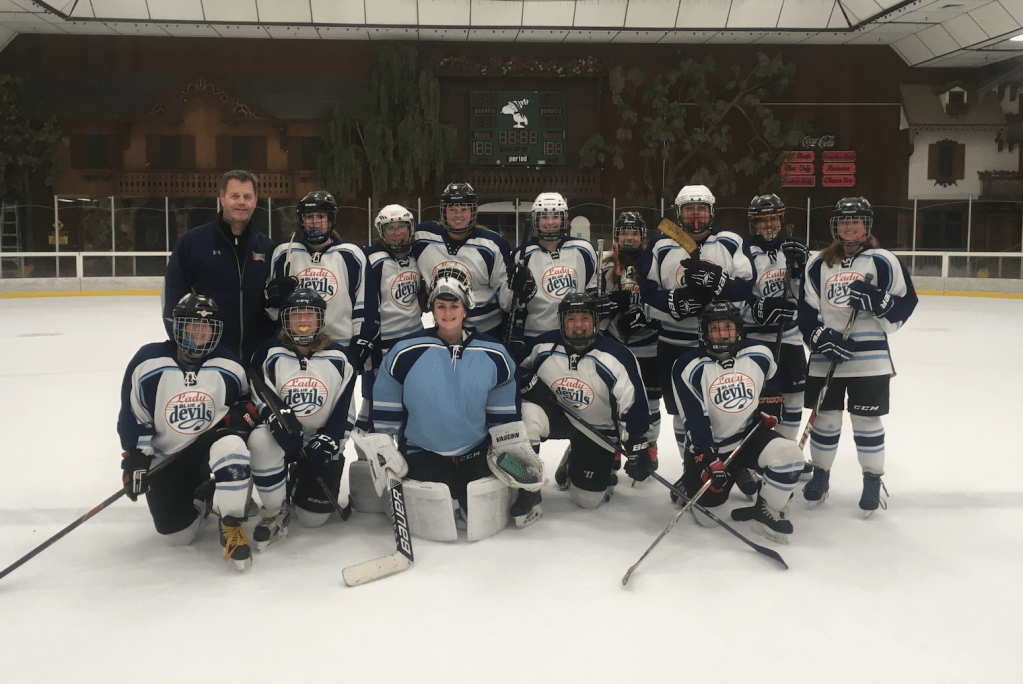
A: The most rewarding was seeing the amount of girls that we got involved in hockey and how it has continued to grow over the years. Having our own uniforms and helping to design that brings me great joy. Seeing our girls being proud of having their first uniforms and belonging to a team was rewarding. Our trips down south to play in tournaments and winning some games and the hard work paying off for the girls was incredibly rewarding and fun. IT was fun coaching a group of pioneering women who weren’t afraid to fail at first but continue to work hard and have some success was great.
Q: What would you tell aspiring coaches to help with their coaching strategies or journeys?
A: Make sure you are always making it about the team. Focus on what each individual player needs to build their confidence and feel like part of something bigger than themselves. Pump people up and don’t tear them down. Focus on small wins and celebrate every one of them – it acts as a building block to greater things and builds confidence.
Q: Is there anything else I haven’t asked about that you think is an important part of understanding the differences and similarities of men’s and women’s hockey?
A: You can draw so many similarities and a few differences but the key is to understanding the individiual athlete and what they need to build skill, desire and confidence in themselves.
Through this conversation with Coach John Young, it is clear that his time as a coach was one of dedication, leadership, and a profound passion for the game. From his time playing in North Vancouver, to leading teams at a higher level and then transitioning from player to coach, Young has gained a deep understanding of each aspect of the game. This wealth has spread to all the players he has coached and touched each of their games. His insights to the differences in mens and womens hockey help to understand the importance of highlighting each players needs and fostering a supportive and team-first environment. Youngs commitment to his teams and passion for teaching demonstrates the spirit of coaching. This interview not only shares the strategic moves used behind the bench but also highlights the impact of a coach that genuinely cares about the success and development of each of his teams and players.

 Erin Young
Leave a comment